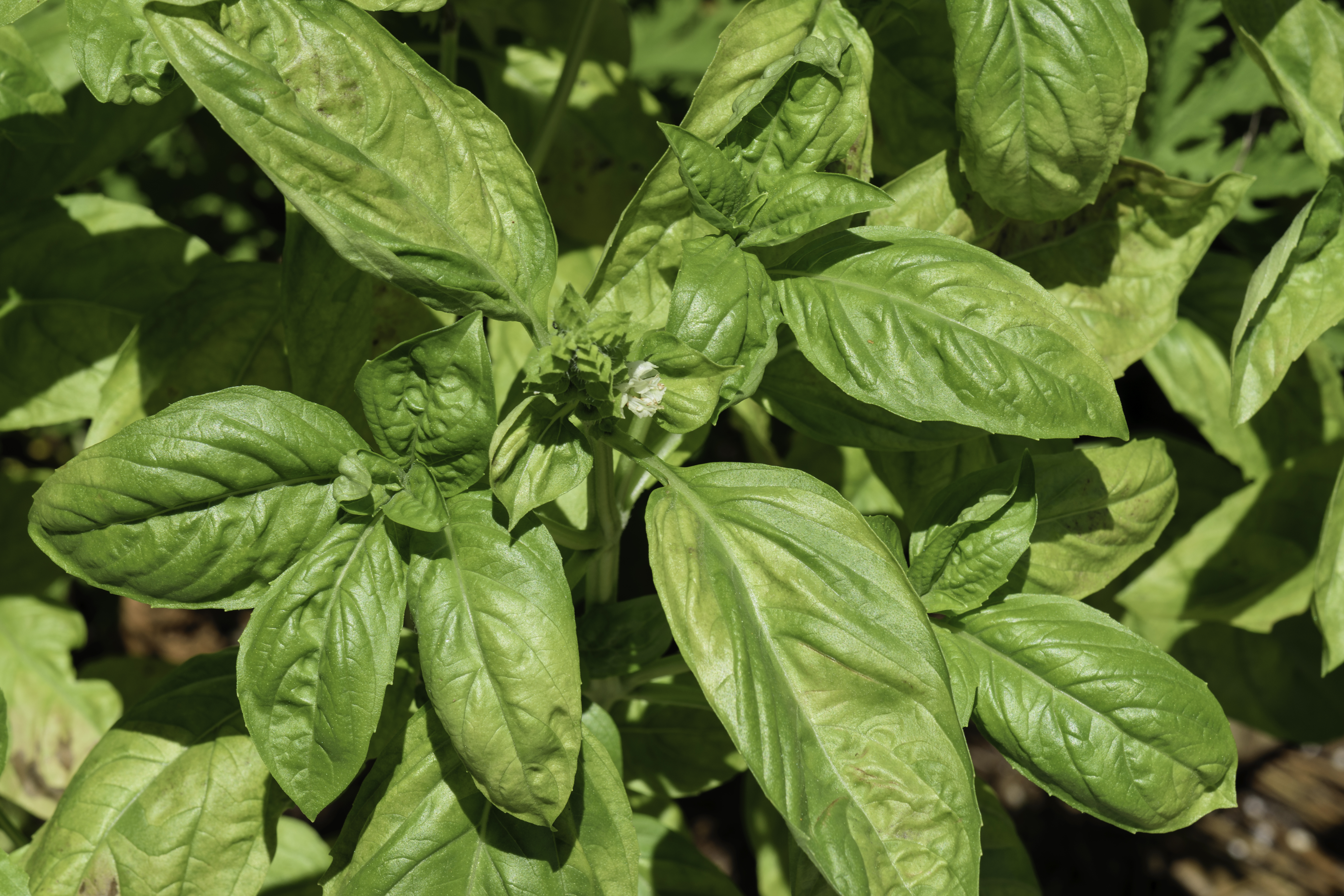
Growing culinary herbs on a kitchen windowsill is one of the more practical applications of indoor gardening. In Czech apartments, the standard supermarket herb pots — typically basil, parsley, or chives — are often a starting point, but they are not designed for long-term indoor growth. Understanding why they fail, and what a more stable setup looks like, makes the difference between a herb dying within two weeks and one producing usable leaves for several months.
This guide covers the five most practical herbs for Czech apartment windowsills, the key failure points for each, and how to set up a simple system that actually works through winter.
Why Supermarket Herb Pots Fail Within Weeks
Supermarket herbs like the basil sold at Albert, Billa, or Tesco are typically grown in controlled greenhouse conditions — high light, precise humidity, and optimised temperatures. They are raised to look full and are often multiple seedlings packed tightly into a small pot to appear lush. This density makes them unsustainable once moved home.
The issues compound: the small pot dries out very quickly, leading to stress; the tight root mass means individual plants compete for limited resources; and the transition from greenhouse to a typical Czech kitchen window — which may receive only two to three hours of light in winter — immediately stresses the plants.
The fix: separate supermarket basil into individual pots of five to seven plants maximum, repot into a larger container with fresh potting soil, and place in the brightest available window. This extends useful life significantly.
The Five Most Practical Herbs for Czech Windowsills
Chives (Pažitka)
The most tolerant of the commonly used culinary herbs. Chives grow as a bulb-forming perennial and handle lower light better than most. They tolerate east and west-facing windows and regrow after cutting. They go dormant in winter if temperatures drop significantly but in a heated flat continue growing slowly year-round.
Watering: keep soil evenly moist but not saturated. They tolerate brief dry periods better than basil. Harvest by cutting to about 3 cm above the soil — the plant regrows from the base.
Mint (Máta)
Mint grows aggressively and is best kept in its own pot — it spreads via underground runners and overwhelms other herbs. It prefers consistent moisture and tolerates partial shade reasonably well, making it one of the more forgiving options for north-facing windows or darker kitchen corners.
The downside: mint in a pot eventually becomes rootbound and declines. Divide and repot every six months to keep it productive. Czech garden centres sell several varieties — spearmint is most useful for cooking, peppermint for tea.
Flat-leaf Parsley (Hladkolistá petržel)
Parsley is biennial — it grows in its first year, flowers and sets seed in its second, then dies. For practical kitchen use, treat it as an annual and restart from seed or supermarket pot each year. It prefers cooler temperatures than basil (15–18°C is fine) and medium to bright indirect light.
Parsley seeds take two to four weeks to germinate and are slow. Starting from a garden centre transplant is more practical for kitchen windowsill use.
Basil (Bazalka)
The most light-demanding of the common kitchen herbs and the most difficult to maintain through Czech winter. Basil needs six or more hours of bright light per day. Below this it grows slowly, becomes leggy, and is more susceptible to fungal issues.
Winter basil in Czech flats: Without a grow light, basil on a south-facing windowsill in Prague from November to February produces acceptable but reduced growth. On any other orientation it declines noticeably. A basic LED grow light solves this completely.
Water basil when the top 1–2 cm of soil is dry. Basil is very sensitive to cold water on its roots — always use room-temperature water. Avoid getting water on the leaves, which promotes fungal spotting in cool conditions.
Thyme (Tymián)
Thyme is a Mediterranean herb that wants bright light and dry-ish conditions. It handles poor soil, low watering frequency, and good air circulation. In Czech apartments it performs best on a south or west-facing window from March to October. In winter it slows significantly but survives; it is semi-woody and perennial, so unlike basil it can carry over from year to year.
The main failure mode: overwatering. Thyme roots rot quickly in heavy, poorly draining soil. Use a well-draining mix with added perlite.
Light: The Non-Negotiable Factor
All culinary herbs evolved outdoors in full or partial sun. Indoor light levels are dramatically lower than outdoor conditions — even a south-facing window in summer provides only 10–15% of the light intensity of direct outdoor sun. For most herbs this is sufficient in summer but may fall short in winter.
A practical light ranking for Czech apartment windows in January:
- South-facing window: adequate for chives, thyme, parsley; marginal for basil
- West-facing window: adequate for chives, mint, parsley; insufficient for basil or thyme year-round
- East-facing window: adequate for chives and mint; insufficient for most others in winter
- North-facing window: only mint and chives survive at reduced growth; all others decline
Watering Principles for Indoor Herbs
The most common mistake is inconsistent watering — alternating between bone dry and saturated. Most kitchen herbs prefer consistent moderate moisture. The practical approach:
- Check soil with a finger daily in summer, every two days in winter
- Water when the top 1–2 cm feels dry for moisture-preferring herbs (basil, mint, parsley, chives)
- Water when the top 3–4 cm feels dry for drought-tolerant herbs (thyme, rosemary, oregano)
- Always water until it drains from the bottom, then empty the saucer after 30 minutes
Soil and Container Setup
Standard potting soil from Czech garden centres works for most herbs without modification, though adding 20–30% perlite improves drainage for thyme and rosemary. Avoid garden soil — it compacts badly in pots and often introduces pests.
Container size matters. Herbs in too-small pots dry out within a day in summer and become root-bound quickly. A 15 cm pot holds one or two herb plants comfortably. For a window box growing multiple herbs, use one rated for at least 10 litres of soil.
Drainage holes are necessary. Decorative pots without holes can work with a nursery pot insert — water the inner pot, let it drain, then place in the decorative outer pot.
Fertilising
Kitchen herbs are moderate feeders. A balanced liquid fertiliser every two to three weeks during the growing season (March to September) is sufficient. Use at half the recommended dose — excess nitrogen produces abundant but weakly flavoured leaves.
Do not fertilise in winter. The slow growth of plants in low light cannot utilise added nutrients, which accumulate in the soil as salts.
Harvesting Correctly
The way herbs are harvested affects how long they remain productive. Pulling individual leaves from the base of a basil stem encourages the plant to put energy into remaining leaves rather than into the stem structure. Cutting the top third of each stem — just above a pair of leaves — encourages bushy growth in basil and mint.
For chives, cut to about 3 cm above soil level. For parsley, cut outer stems at the base. Never remove more than one third of a plant at one harvest — the remaining leaves continue photosynthesis and allow recovery.
For further reading on edible plant cultivation in Czech conditions, the Czech Botanical Society maintains accessible reference material on regional plant biology.